
Case Study
NICE Systems
Enterprise
UX Design
Cleaner workflows for complex teams.
The project at a glance
Challenge
Make dense scheduling workflows easier for agents and administrators to understand.
My contribution
Redesigned critical internal flows, clarifying actions, system states, and next steps.
Output
Reworked workflow screens focused on reducing ambiguity in repetitive scheduling tasks.
Project Overview
Not all design needs to announce itself. Some of it is meant to stay out of the way — especially when it's powering enterprise software thousands of agents rely on daily.
At NICE, I was brought in to rethink a handful of critical internal workflows used by both agents and administrators to manage shift schedules. The flows were dense, unclear, and easily misread.
My role was to bring clarity to something most people wished they didn't have to think about. Quiet work. But it mattered.


Objectives
The Brief
Approach
Design as Translation
I rebuilt three key flows — requesting a shift change, trading with another agent, and sending schedule reminders. Each was stripped down, reorganized, and rebuilt with clarity and intention.
Admins and agents didn't need new features. They needed the existing ones to make sense.
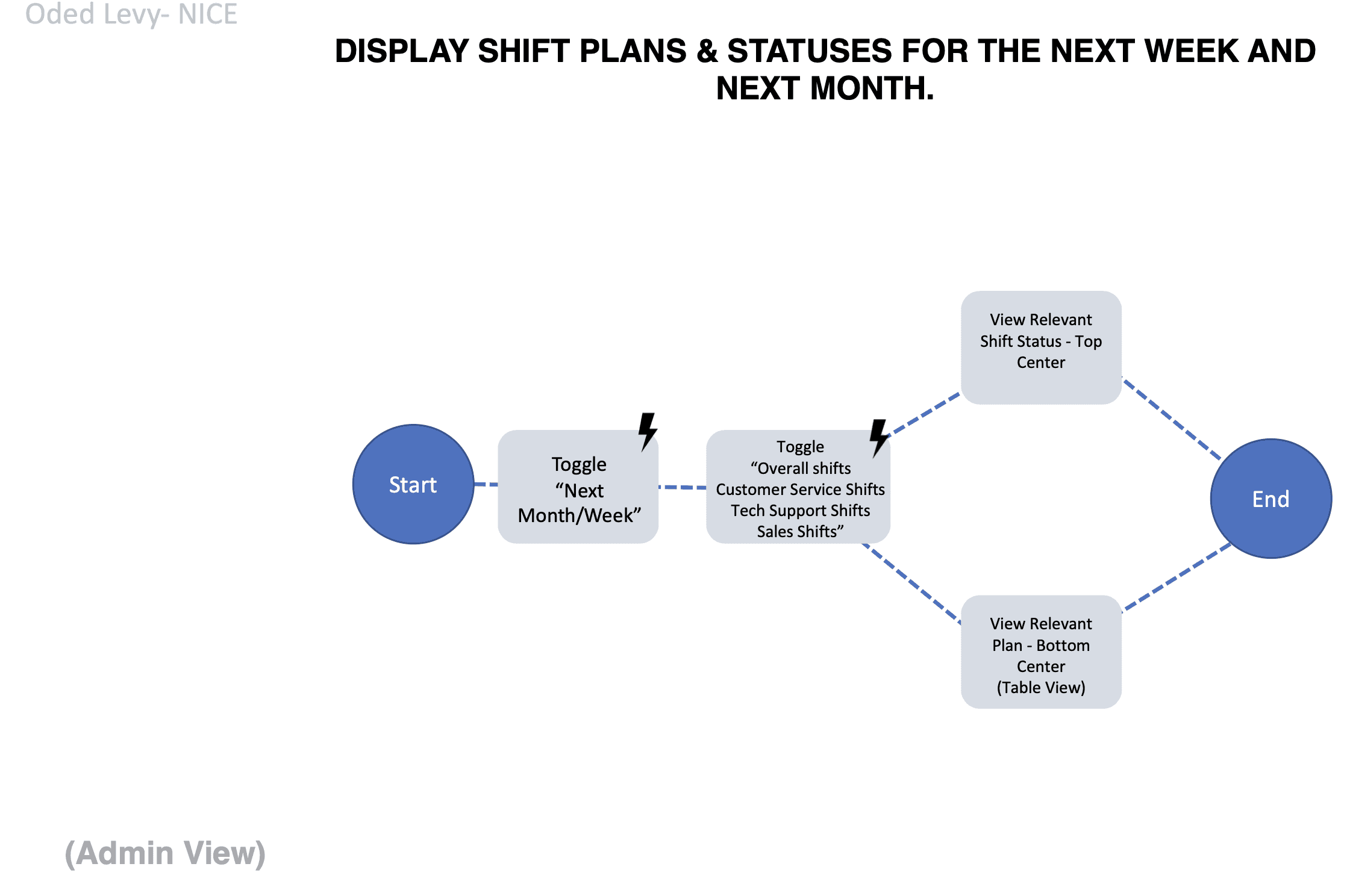
Presenting workflow directions to the team
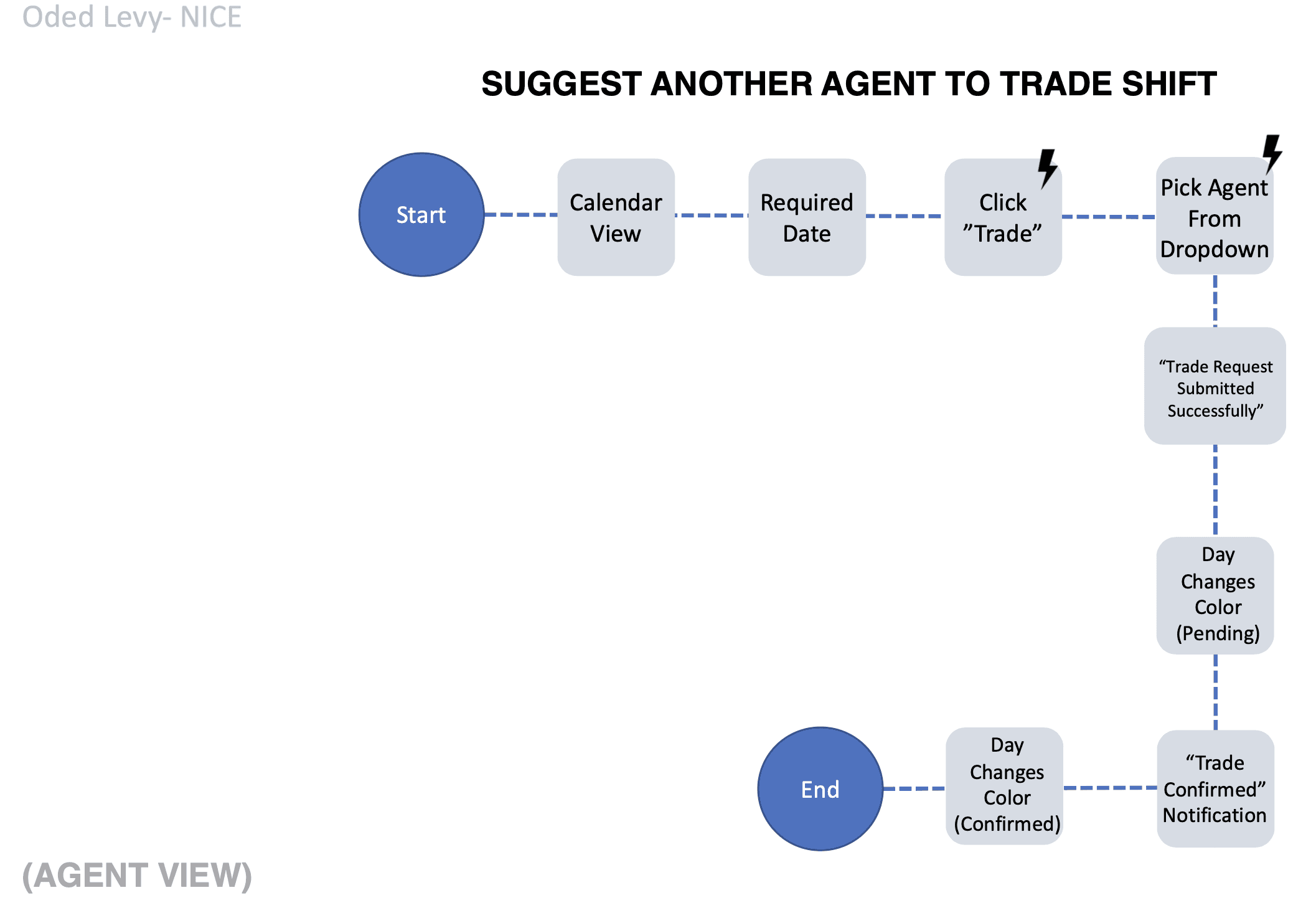


When people use enterprise software all day, the interface becomes their environment. I wanted this one to feel steady, predictable, and unburdened — something that guides without needing to shout.

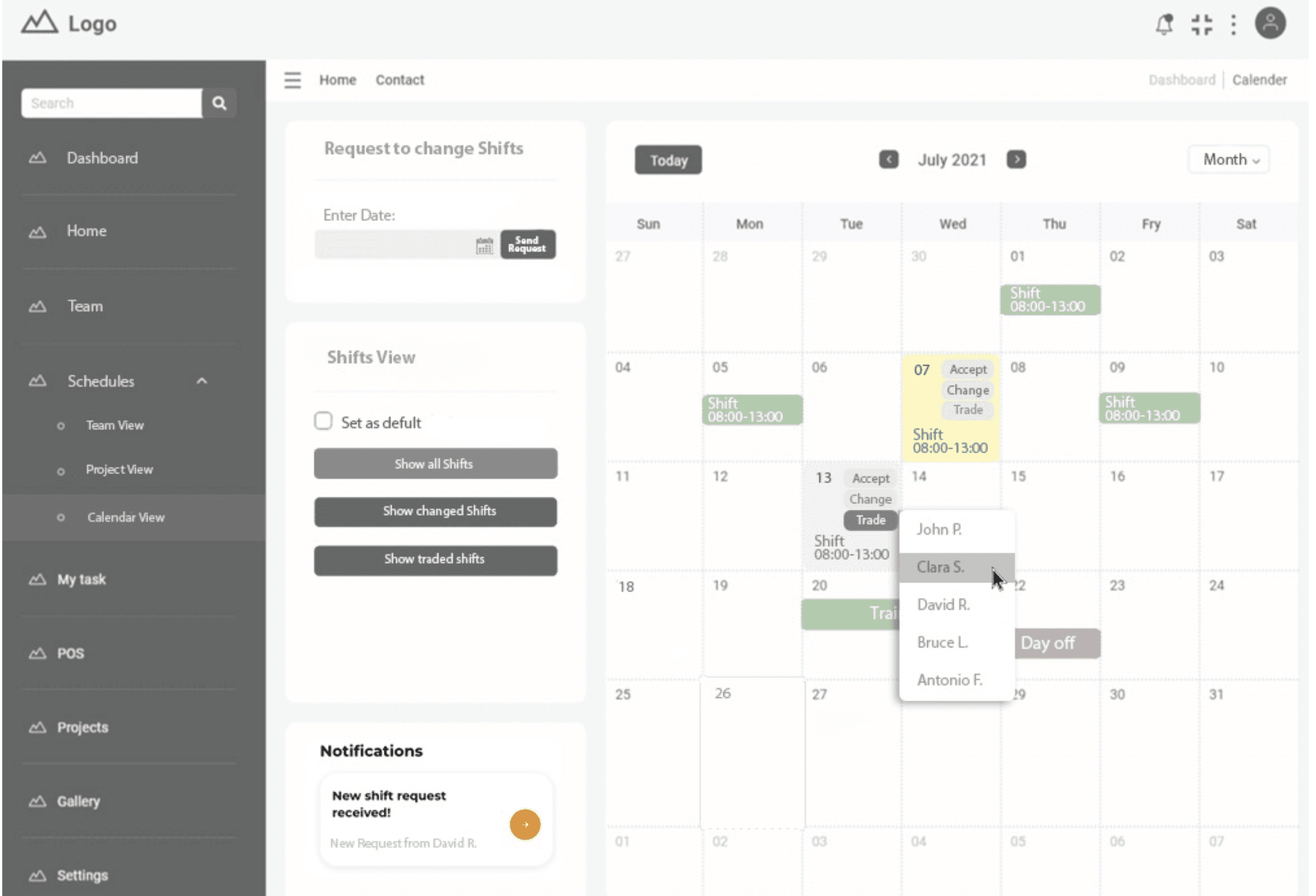
Outcomes
What Was Delivered
Reduction in task completion time across redesigned workflows.
Rollout rate within the first quarter across internal departments.
Core workflows redesigned — now used as internal reference for future updates.
This wasn't a headline project. It was the kind of work that only gets noticed when it's missing. But that's the point — good design often doesn't demand attention. It earns trust by getting out of the way.